Angioplasty, Stenting, and Atherectomy for PAD: Which Treatment Is Right for You?
Angioplasty, stenting, and atherectomy all treat peripheral artery disease. Dr. Jeffrey Tauth explains how each works and how the right one is chosen.
Jeffrey G. Tauth, M.D., F.A.C.C.Board-Certified Interventional Cardiologist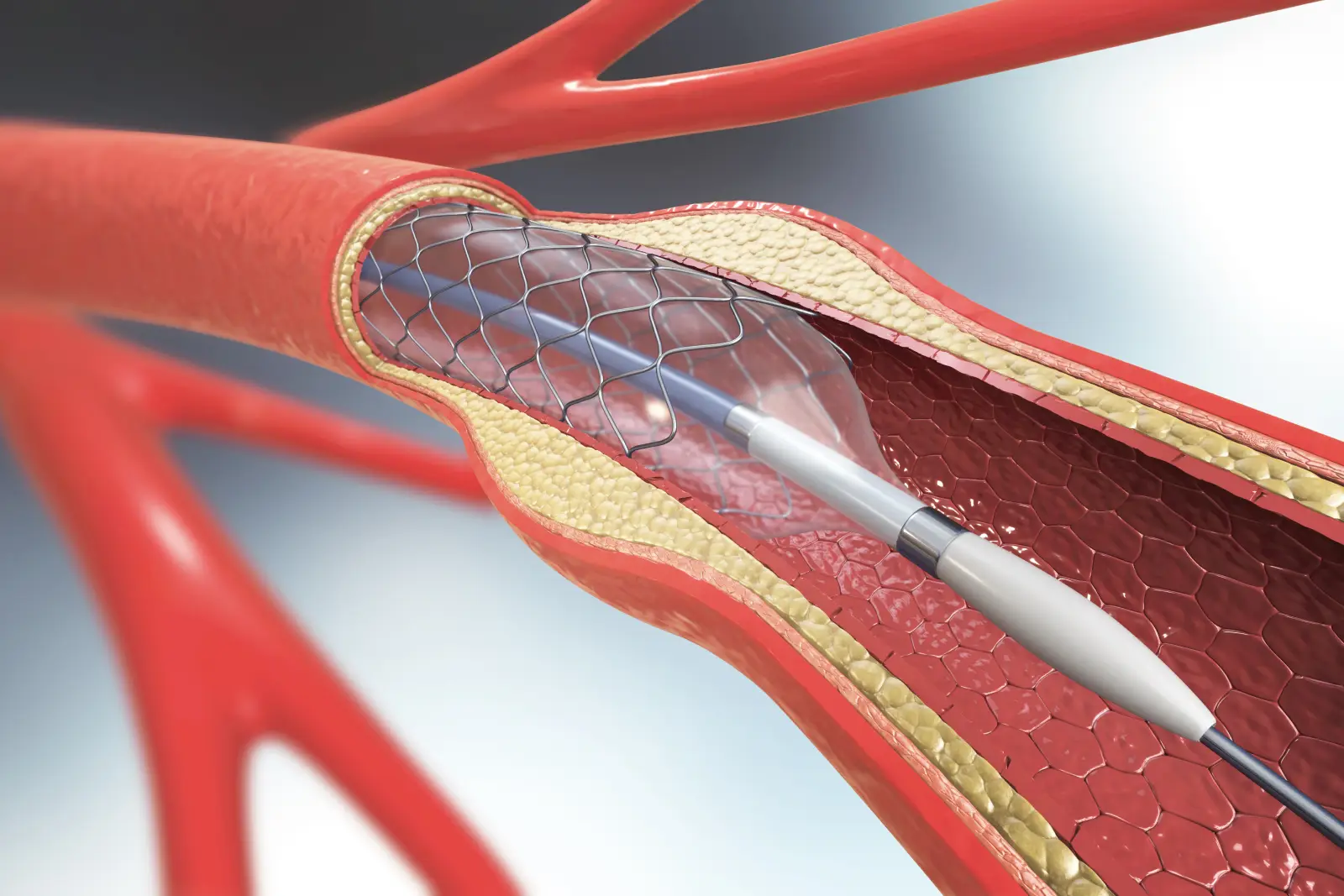
Patients told they need PAD treatment often hear three unfamiliar terms in one appointment: angioplasty, stenting, and atherectomy. All three restore blood flow through a catheter instead of open surgery, but they work differently, and the right choice depends on the specific blockage.
Dr. Jeffrey Tauth, a board-certified interventional cardiologist in Hot Springs for more than 30 years, performs all three at the Vascular Center of Hot Springs. Here is how each one works and how the decision gets made.
Angioplasty: Widening the Artery With a Balloon
How It Works
Angioplasty is typically the starting point for catheter-based PAD treatment. A catheter with a deflated balloon at its tip is guided through the artery to the site of the blockage, using imaging to confirm exact positioning before anything is done. Once positioned, the balloon is inflated, compressing the plaque against the artery wall and widening the interior channel so blood can flow more freely. The balloon is then deflated and removed, and in many cases, the artery is imaged again to confirm the improvement in blood flow.
The entire process, from catheter insertion to balloon removal, typically takes less time than the other two procedures, which is one reason it is often tried first when a blockage is well suited to it.
When Angioplasty Is the Right Choice
Angioplasty tends to work best when the blockage involves softer, less calcified plaque. Because a balloon works by compression rather than removal, plaque that has hardened significantly does not compress as predictably, which can limit how effective angioplasty is on its own in those cases. For blockages that are shorter and located in an area where placing additional hardware is straightforward, angioplasty alone, or angioplasty followed by a stent, is often sufficient.
Stenting: Holding the Artery Open Long-Term
How It Works
A stent is a small mesh tube, typically made of metal, that is placed inside the artery to act as a scaffold. Rather than relying on the artery to stay open after the balloon is removed, the stent physically holds the vessel walls apart. Stents are usually placed immediately after angioplasty, in the same procedure, once the artery has been widened. Depending on the artery being treated, the stent may be self-expanding, meaning it opens on its own to the size of the vessel once released from the delivery catheter, or balloon-expandable, meaning it is expanded to the correct size using a balloon during placement.
Why Stenting Matters for Long-Term Results
Without a stent, some arteries that were successfully widened by angioplasty will gradually narrow again over the following months, a process called restenosis. A stent significantly reduces how often this happens by providing continuous structural support rather than relying on the vessel to hold its new shape unassisted.
Not every angioplasty requires a stent. Whether one is placed depends on how the artery responds after the balloon is removed, the location of the blockage, and the length of the affected segment. Arteries in certain locations, particularly those subject to significant bending or compression during normal movement, may respond differently to a stent than arteries in more stable locations, so that decision is made case by case rather than automatically.
“Ive been seeing Dr. Tauth since 2007 when he saved my life one nite from a widowmaker heart attack. And ive had 2 stents since then over [t]he years. Wouldn’t see anyone else. He is truly a great family man has a wonderful wife who is a nurse as well. Very happy to have him as my heart doctor for almost 2 decades now.”
Individual results may vary. Reviews reflect one person’s experience and are not typical of, or a guarantee of, any outcome.
Atherectomy: Removing Plaque Rather Than Compressing It
How It Works
Atherectomy takes a different approach than angioplasty. Rather than compressing plaque against the artery wall, a catheter-mounted device is used to physically cut, shave, or grind the plaque away and remove it from the vessel. Several types of atherectomy devices exist, using different mechanisms (rotational, directional, or laser-based) to break down and clear plaque material, and the choice among them depends on the specific characteristics of the blockage being treated.
When Atherectomy Is Used
Atherectomy is particularly useful for plaque that has become heavily calcified, the kind of hardened blockage that does not respond well to balloon compression alone. By removing plaque mass before angioplasty, atherectomy can make the artery more responsive to the balloon and reduce the likelihood that a stent will be needed afterward. It is also considered in cases involving long-segment blockages or arteries that have narrowed again after a previous stent was placed.
Clinical research has not consistently shown atherectomy to produce better long-term results than angioplasty and stenting for every type of blockage. Its clearest advantage is in preparing complicated, heavily calcified lesions for the other treatments, rather than functioning as a universally superior option. Studies on appropriately selected calcified lesions have found that atherectomy can achieve greater initial luminal gain and reduce the need for a stent afterward, even without a consistent long-term advantage over other approaches across all blockage types. The decision to use it comes down to the specific blockage being treated, not a general preference for one technique over another.
At a Glance: Comparing Angioplasty vs. Stenting vs. Atherectomy
| Treatment | What It Does | Best Suited For | Typically Combined With |
|---|---|---|---|
| Angioplasty | Widens the artery using an inflated balloon | Softer, less calcified blockages | Often followed by a stent |
| Stenting | Places a mesh scaffold to hold the artery open long-term | Preventing the artery from re-narrowing after angioplasty | Placed immediately after angioplasty |
| Atherectomy | Physically removes plaque rather than compressing it | Heavily calcified or previously treated blockages | Often followed by angioplasty, sometimes a stent |
Which PAD treatment is best for you?
Choosing among angioplasty, stenting, and atherectomy is not a matter of picking the newest or most advanced-sounding option. It is a decision based on several specific factors that Dr. Tauth evaluates using the vascular imaging obtained during diagnosis:
- Degree of calcification: Heavily calcified plaque often responds better when atherectomy is used to prepare the vessel before angioplasty
- Length of the blocked segment: Longer blockages may require a different combination of treatments than short, focal narrowings
- Location of the blockage: Some arteries tolerate a stent well; others are subject to more movement and stress that make stenting less durable in that specific location
- Whether the artery has been treated before: Arteries that have re-narrowed after a previous procedure may need a different approach the second time
These procedures are also frequently combined within a single session. Atherectomy may be used to prepare a heavily calcified lesion, followed immediately by angioplasty, followed by a stent if the artery’s response warrants one. The specific combination is determined in real time based on what the imaging shows once the procedure is underway.
What to Expect During and After Treatment
All three procedures are performed at the Vascular Center of Hot Springs on an outpatient basis. Patients receive local anesthesia at the catheter access site rather than general anesthesia, and most go home the same day. The length of the procedure varies depending on which combination of treatments is used and how complex the blockage turns out to be once imaging is underway, but none of the three requires an overnight hospital stay under typical circumstances.
Recovery typically involves a short period of limited activity, monitoring the access site for bruising or unusual swelling, and a follow-up visit to confirm the treated artery is functioning as expected. Patients are also counseled on the same lifestyle factors that affect PAD generally, including smoking cessation and continued management of blood pressure and cholesterol, since the procedure addresses the immediate blockage but does not eliminate the underlying disease process that caused it.
Because Dr. Tauth performs the diagnostic workup, the procedure, and the follow-up care within the same practice, decisions about which combination of treatments to use are made by the physician who already understands the full history of your case, not a separate provider encountering the imaging for the first time.
Frequently Asked Questions
Will I be awake during angioplasty, stenting, or atherectomy?
Yes. All three procedures are performed using local anesthesia at the catheter access site, along with medication to help you relax. General anesthesia is not required.
What happens if the artery narrows again after angioplasty or stenting?
If restenosis occurs, the artery can often be retreated using angioplasty, atherectomy, or another stent, sometimes in a different combination than the first time. Regular follow-up is how this is caught early, before symptoms become severe again.
Is bypass surgery ever necessary instead of angioplasty, stenting, or atherectomy?
In some cases, yes. Bypass surgery, which reroutes blood flow around a blockage using a graft, is generally reserved for blockages that are too long, too complex, or too extensively calcified for angioplasty, stenting, or atherectomy to treat effectively.
How soon can I walk normally after a PAD procedure?
Most patients resume light activity within a few days of angioplasty, stenting, or atherectomy. Dr. Tauth provides specific guidance based on which procedure was performed and how the access site is healing.
Are angioplasty, stenting, and atherectomy considered major surgery?
No. All three are minimally invasive, performed through a small catheter access point rather than an open incision, and typically done on an outpatient basis without an overnight hospital stay.
Schedule a Consultation With Dr. Tauth
If you may need treatment for peripheral artery disease, Dr. Jeffrey Tauth welcomes all patients at Hot Springs Heart and Vascular. Call (501) 767-4278 to speak with a member of our staff and schedule an appointment at your earliest convenience.
Written by
Jeffrey G. Tauth, M.D., F.A.C.C. · Board-Certified Interventional Cardiologist
Interventional cardiologist with more than 30 years in cardiac and vascular care, practicing in Hot Springs and Mena, Arkansas.